
Product Management Leadership
Episodes from Lenny's Podcast about Product Management Leadership.
8 episodes

Context is now the product: Product leadership when software can build itself | Karri Saarinen
Sep 29, 2026 · 17:22
Karri Saarinen, co-founder of Linear, argues that AI-driven efficiency alone doesn't produce better products — the learning teams get from doing the work themselves does, and outsourcing execution to agents severs that connection. Drawing on his summer off from following AI news, he says nothing fundamental changed: building great products and growing revenue remains hard. He explains how Linear keeps its learning loop alive — engineers join shared Slack channels with customers, an AI agent sends him daily briefings on customer AI workflows, a weekly Quality Wednesday has everyone find and fix one defect, and optional feature roasts let the whole company critique new features candidly. He urges teams to automate repeatable work and reinvest the saved time in customer context, judgment, and taste, because context becomes the product: better-informed people make better decisions, and hiring for judgment is the first step to building great products.

Roles aren't converging—they're expanding | Tamar Yehoshua (Atlassian CPO)
Sep 28, 2026 · 21:31
Atlassian CPO Tamar Yehoshua argues AI is expanding—not converging—product roles, making PMs 'AI builders' who must choose between rowing (coding) and steering. She walks through three Atlassian examples: a non-coding Confluence PM shipped 26 PRs in a month as Remix launched in six weeks versus six months pre-AI; the zero-to-one Rovo Claw was vibe-coded by a PM and designer until the PM shifted to steering; and Jira shipped 22 features in about 10 weeks at 3X throughput without PMs touching production code. She details Atlassian's AI Fluency Index and its quarterly AI Builder's Weeks, which have trained over 1,000 people and produced 120 new workflows. She admits no one has figured out how to measure AI-era productivity; Atlassian tracks PRs deployed and features delivered.

The rise of HI-ICs | Elena Verna (Lovable)
Sep 28, 2026 · 19:23
Elena Verna, who led growth at Lovable, argues AI has broken the old rule that more reports equal more impact, enabling high-impact individual contributors who can find a problem, decide, execute, ship, and own the outcome alone. She became an IC at Lovable after being fired out of her management role, now spending 90% of her time building—pricing pages, prototypes, analysis—instead of meetings. She calls AI 'average intelligence' at your fingertips, so only one or two areas of exceptional craft are needed. For this to work, organizations must flow information freely (Lovable has no titles, just ICs, leads, and heads, with Slack agents for docs), grant authority with accountability including the right to fail—she has cost Lovable millions in failed experiments—and decouple pay from headcount, arguing ICs should out-earn managers. Her survey found 42 of 51 managers want to return to IC roles; management should be a career choice, not a promotion.

What it takes to be a top PM today | Robby Stein (Google Search)
Sep 28, 2026 · 19:13
Robby Stein, PM at Google Search who previously led Instagram Stories and Reels at Meta, argues that in the AI era a PM's true value is no longer coordinating work but making great decisions. At the Lenny and Friends Summit he lays out a three-chapter playbook: understand people deeply (using the Jobs to Be Done method from Clayton Christensen's Competing Against Luck, illustrated by a story where his wife's 'jump on the bed' test revealed motion isolation—not cooling or price—was the real buying job), diagnose root causes of why a product isn't working, and refine craft until the product works perfectly and sparks joy. He explains that Instagram Stories' low adoption traced to audience anxiety ('my ex is on it'), which two years of iteration resolved with Close Friends, while Reels' failed ephemeral launch in Brazil taught the team that aspiring entertainers wanted permanent, viral posts. At Google he describes early multimodal shopping experiences where users couldn't describe couches in text, an AI mode that needed Google's trusted maps and ratings to feel complete, and an agent-based tool that uses the product like a user to catch broken or off-spec responses at…

Molly Graham: The grief, burnout, and opportunity hiding inside the AI transition
Sep 27, 2026 · 1:34:15
Molly Graham tells Lenny Rachitsky that her famous 'give away your Legos' advice no longer holds in an AI world: delegating to robots isn't delegating to a human, because you keep the oversight and mental tax. The advice came from Google and Facebook scale — her department grew from 25 to 125 people in 9 months, Facebook from 500 employees to 5,500 and a billion users — and leaning into change still wins. Grief, loneliness, and burnout in tech are real — burnout jumped from 44% to 55% — but AI displacement fear is overblown: AI-branded layoffs are 'bullshit,' and Manoush Zomorodi's reframe — assume your job always exists, just different every six years. Some Legos — judgment, trust, strategy — should never be given away, and AI is a lazy intern needing coaching, not a superintelligence.
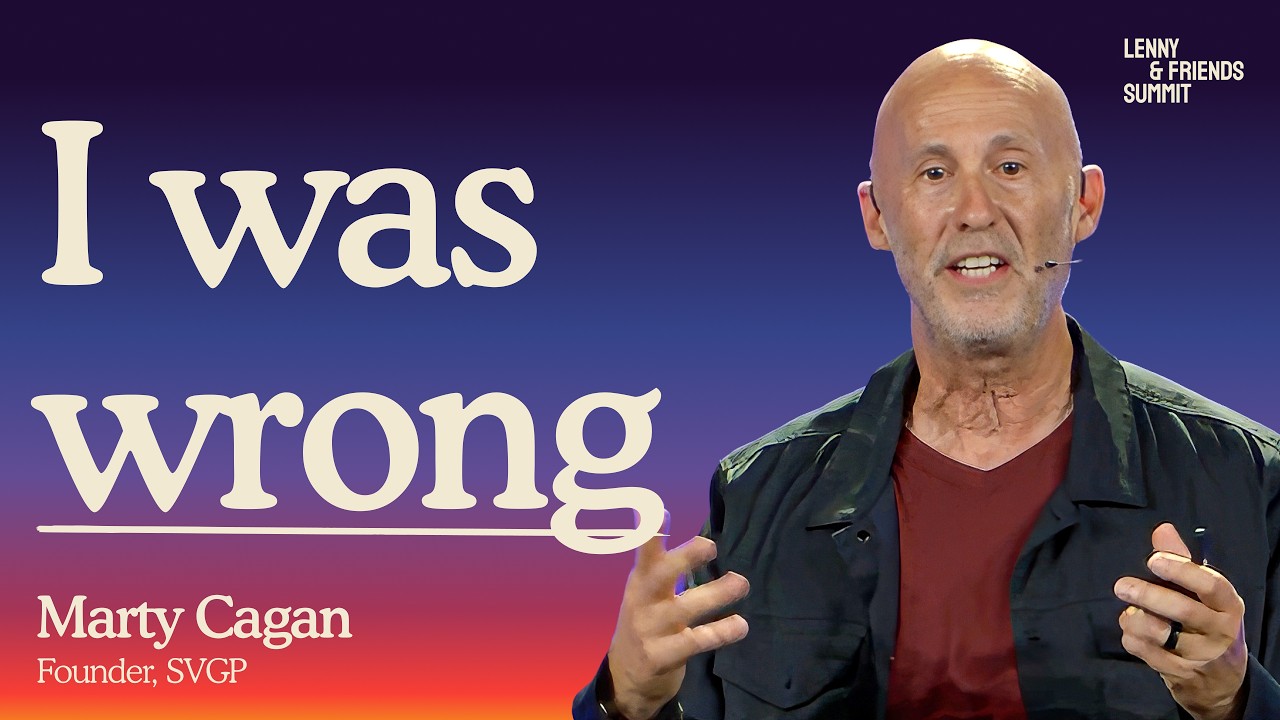
Marty Cagan: Strong Opinions, loosely held
Sep 25, 2026 · 22:32
At the Lenny and Friends Summit, Marty Cagan lists ten big regrets about his product advice, starting with underweighted business viability and overemphasized problem discovery versus solution discovery. He argues the craving for predictability turns roadmaps and PRDs into enablers of arrogance, causing most failed products; PRDs are harmless only once evidence proves the solution works. He adds that politics defeat good work, product is a 'full contact blood sport,' and Inspired's omission of product leadership misled teams into thinking empowered teams alone suffice. His biggest regret: people crave process, frameworks, and now AI as substitutes for thinking. Thanks to AI, he argues, outcomes matter more than ever, and building to learn rather than to earn is the job.
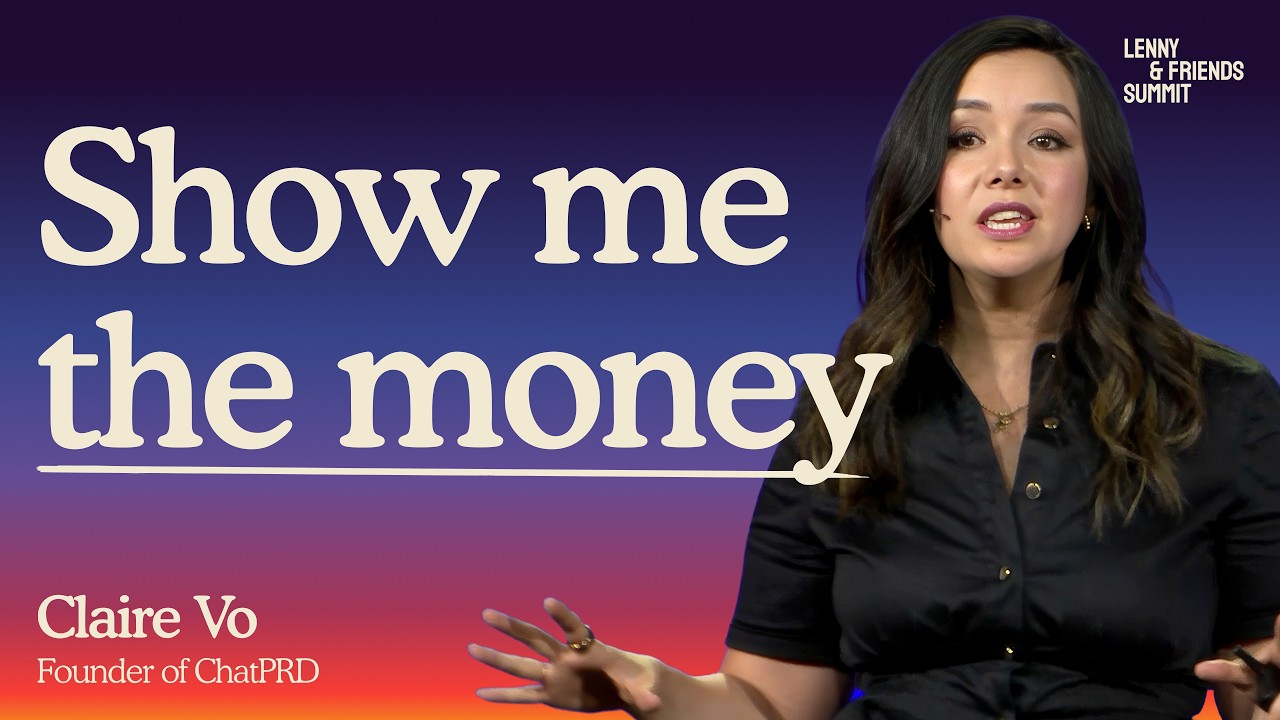
Everyone’s shipping more. Does any of it matter? | Claire Vo
Sep 24, 2026 · 23:58
Claire Vo, founder of ChatPRD, argues traditional product roadmaps are dead because AI has made building so cheap the bottleneck is no longer engineering capacity but conviction about what to build. At the Lenny and Friends Summit she describes shipping 3x more PRs with 40 Grok bots yet being 'out of good ideas' — even trashing her built Product Graph engine for ChatPRD as undifferentiated. She warns of three traps at 'roadmap zero': the backlog trap (AI clears lists without progress), the parity trap (competitors converge on identical products), and the churn trap (shipping without learning). Her alternative: durable convictions with disposable features, evidence defined upfront, and ambitious two-week experiments over feature velocity — code is abundant, customer trust is not.
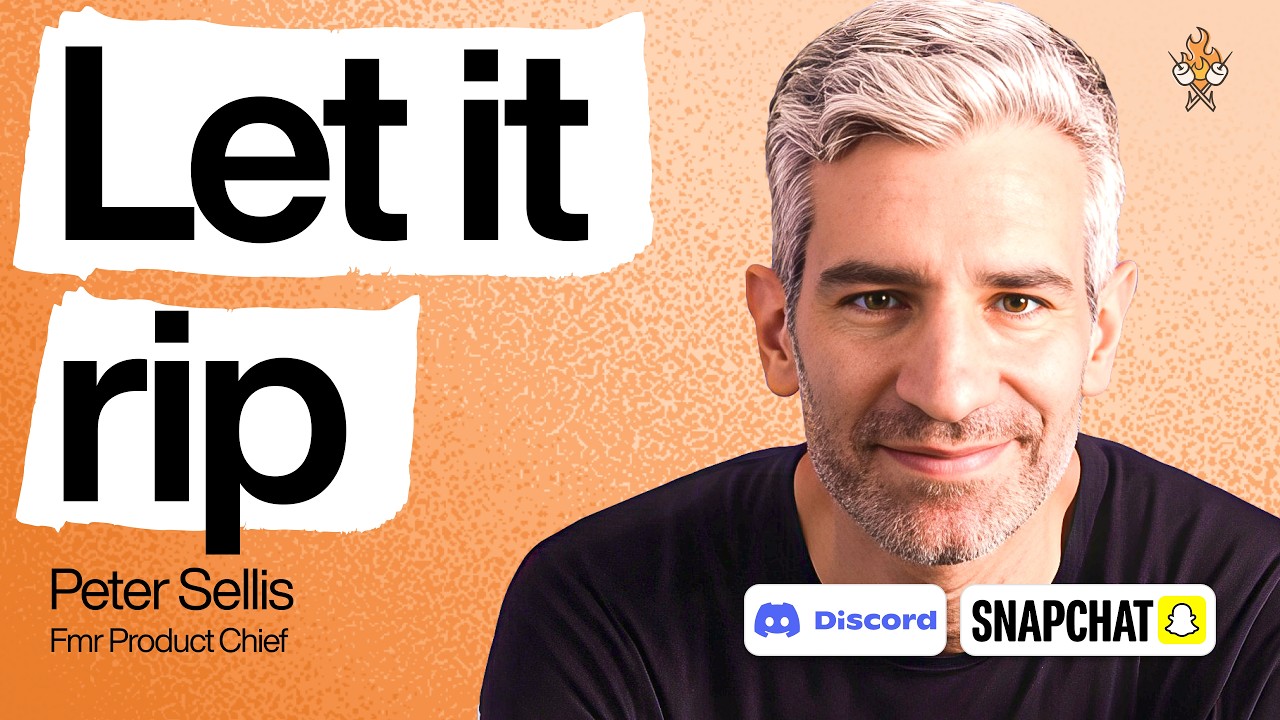
90 minutes of unfiltered product advice from Snap and Discord’s product chief | Peter Sellis
Sep 20, 2026 · 1:36:53
Peter Sellis, the first product manager at Snapchat (where he spent seven years) and former Head of Product at Discord, argues the median product manager is probably bad because the best ones exit to found startups or become executives, skewing the profession's power distribution. He explains why he designs teams like terrorist organizations—with clear ideology and single-threaded decision owners—why Snap's ads business underperformed due to a young user base, a camera-first format, and a messaging core, and how growth comes from the core product, as with Discord refocusing on multiplayer gaming. He also covers managing Nikita Bier, Snap's recovery from the 2018 redesign, systems thinking, OpenAI's ads opportunity, and his three oxymorons of great PMs.
Powered by PodHood