
AI Product Development
Episodes from Lenny's Podcast about AI Product Development.
13 episodes
Inside the black box of AI: How AI models actually think | Emmanuel Ameisen (Anthropic)
Oct 18, 2026 · 1:12:13
Emmanuel Ameisen, an interpretability researcher at Anthropic, tells Lenny Rachitsky that making models like Claude is not understanding them—their math is grown, not built, and must be studied like a brain. Decoding intermediate results reveals models form general concepts and silently plan tokens ahead, like a poetry model flagging a rhyme. He argues next-token prediction is deceptively hard—answering 'the capital of the state that contains Dallas' requires a world model—and smooth scaling yields apparent capability jumps at reliability thresholds. On alignment, he recounts a model driven mad by a bad training answer (36 instead of 12), asks whether Claude behaves only because 'Lenny is watching,' and defends anthropomorphizing as useful. He leaves AI consciousness an open question.
Why every company now needs to think and operate like a lab team | Josh Woodward (VP Google Labs)
Oct 11, 2026 · 1:02:12
Josh Woodward, head of Google Labs, the Gemini app and AI Studio, tells Lenny Rachitsky every company now needs to operate like a labs team to find what's newly possible before competitors or startups eat their lunch. He says the best ideas rarely come from design sprints but from small obsessed teams, so his labs keep an "almost possible" list—like immersive entertainment—and act when tech crosses a phase shift. Product-market fit is "way more art than science": the metric is eyes lighting up at prototypes, not DAUs, and the team usually knows to kill an idea before the leader does. He hires for "unlearning rate" and "explosive endurance," rejects the "everyone's a builder" hype, and says labs teams need independence, "users first, Google second," and license to make "good trouble."
OpenAI’s Head of ChatGPT: We’re entering a new era of AI (again) | Tibo Sottiaux
Oct 4, 2026 · 37:23
Lenny's Podcast interviews Tibo Sottiaux, OpenAI's Head of ChatGPT and Codex, who argues always-on agents like OpenAI's new Dots will replace today's apps since most actions on the internet will soon be taken by agents. He explains Dots works 24/7 across devices with no model picker, that Codex and ChatGPT Work will merge for ChatGPT's 1.2 billion users, and that agent loops and graphs are a passing phase versus systems that learn. He details the open ecosystem—Sign in with ChatGPT at 16 partners, plugin revenue share—where plugin discovery runs on retention, not SEO. His Dot warned him five minutes before a DevDay demo that production was down; he says typing fast matters less while taste and 120+ ex-founders define hiring. He cites OpenAI's safety spend and the withheld 6.1 Astra model.

Context is now the product: Product leadership when software can build itself | Karri Saarinen
Sep 29, 2026 · 17:22
Karri Saarinen, co-founder of Linear, argues that AI-driven efficiency alone doesn't produce better products — the learning teams get from doing the work themselves does, and outsourcing execution to agents severs that connection. Drawing on his summer off from following AI news, he says nothing fundamental changed: building great products and growing revenue remains hard. He explains how Linear keeps its learning loop alive — engineers join shared Slack channels with customers, an AI agent sends him daily briefings on customer AI workflows, a weekly Quality Wednesday has everyone find and fix one defect, and optional feature roasts let the whole company critique new features candidly. He urges teams to automate repeatable work and reinvest the saved time in customer context, judgment, and taste, because context becomes the product: better-informed people make better decisions, and hiring for judgment is the first step to building great products.

Roles aren't converging—they're expanding | Tamar Yehoshua (Atlassian CPO)
Sep 28, 2026 · 21:31
Atlassian CPO Tamar Yehoshua argues AI is expanding—not converging—product roles, making PMs 'AI builders' who must choose between rowing (coding) and steering. She walks through three Atlassian examples: a non-coding Confluence PM shipped 26 PRs in a month as Remix launched in six weeks versus six months pre-AI; the zero-to-one Rovo Claw was vibe-coded by a PM and designer until the PM shifted to steering; and Jira shipped 22 features in about 10 weeks at 3X throughput without PMs touching production code. She details Atlassian's AI Fluency Index and its quarterly AI Builder's Weeks, which have trained over 1,000 people and produced 120 new workflows. She admits no one has figured out how to measure AI-era productivity; Atlassian tracks PRs deployed and features delivered.

The rise of HI-ICs | Elena Verna (Lovable)
Sep 28, 2026 · 19:23
Elena Verna, who led growth at Lovable, argues AI has broken the old rule that more reports equal more impact, enabling high-impact individual contributors who can find a problem, decide, execute, ship, and own the outcome alone. She became an IC at Lovable after being fired out of her management role, now spending 90% of her time building—pricing pages, prototypes, analysis—instead of meetings. She calls AI 'average intelligence' at your fingertips, so only one or two areas of exceptional craft are needed. For this to work, organizations must flow information freely (Lovable has no titles, just ICs, leads, and heads, with Slack agents for docs), grant authority with accountability including the right to fail—she has cost Lovable millions in failed experiments—and decouple pay from headcount, arguing ICs should out-earn managers. Her survey found 42 of 51 managers want to return to IC roles; management should be a career choice, not a promotion.
How to scale intent, quality, and artistry with Al | Katie Dill (Stripe)
Sep 25, 2026 · 21:48
Stripe design chief Katie Dill argues that AI's building boom risks producing generic 'zombie UI' unless builders hold onto intentionality, a clear point of view, and care in the details—a lesson she draws from the post-war building boom that copied Modernism until nothing differentiated the buildings. She shares three watchpoints: LLMs default to probable, popular answers rather than original ones; AI tempts teams to mistake fast, prematurely polished output for done; and easy building makes work feel disposable. Her four recommendations are to define a point of view (at Stripe, optimism shapes everything from colors to copy), encode standards into the machine via opinionated design systems—like Stripe's CLI harness that turns prompts into production and scales intent, not just consistency—refuse to confuse done with good by assigning an editor who experiences products like users and iterates (an opening animation that took 56 AI iterations), and unleash AI as a creative catalyst to invent new interfaces and raise the ceiling, not just the floor.

What product looks like when coding is solved | Geoff Charles (Ramp CPO)
Sep 25, 2026 · 19:31
Geoff Charles, CPO of Ramp, argues that building faster with AI is not about coding faster but about finding and removing bottlenecks across the whole product development process. Using an F1 racing analogy—pit stops fell from 67 seconds to 1.8—he shows how Ramp automated each stage: a customer insight agent to surface pain, an agent called Glass to define specs and prototypes, its Inspect coding agent (75% of PRs, 1,000 from non-engineers), ReviewBuddy handling 93% of code reviews, the Testo QA agent that caught 425 bugs in 30 days, and Gadget answering 85% of PM questions. He argues PMs evolve into three tracks—technical factory-builder, tastemaker, and GM—and urges leaders to obsess over the factory, not just the product, using constraints to pick one dimension to be world-class in.

Everyone’s shipping more. Does any of it matter? | Claire Vo
Sep 24, 2026 · 23:58
Claire Vo, founder of ChatPRD, argues traditional product roadmaps are dead because AI has made building so cheap the bottleneck is no longer engineering capacity but conviction about what to build. At the Lenny and Friends Summit she describes shipping 3x more PRs with 40 Grok bots yet being 'out of good ideas' — even trashing her built Product Graph engine for ChatPRD as undifferentiated. She warns of three traps at 'roadmap zero': the backlog trap (AI clears lists without progress), the parity trap (competitors converge on identical products), and the churn trap (shipping without learning). Her alternative: durable convictions with disposable features, evidence defined upfront, and ambitious two-week experiments over feature velocity — code is abundant, customer trust is not.

How to run your product team like a research lab | Dan Shipper (Every)
Sep 24, 2026 · 18:32
Dan Shipper, co-founder and CEO of Every, argues product orgs should add a small labs team exploring frontier AI like Astra 6 and Fable 5.1 while the product team executes, because exploring and executing pull in opposite directions. Labs teams of one or two people—messy "pirates" with "architects"—should dogfood, run parallel experiments, and expect to discard 90%, recouping ROI through content and early adopter programs. Anthropic Labs produced Claude Code and skills this way, and OpenAI's Codex, launched February 2026, merged into ChatGPT's 800 million daily users. Every's "Kate Bench" shows the pipeline: an AI copy editor trained on editor-in-chief Kate's edits cut her work 12% in a month. He advises weekly pipeline reviews and criteria—recurring usage, 10x better, affordable.
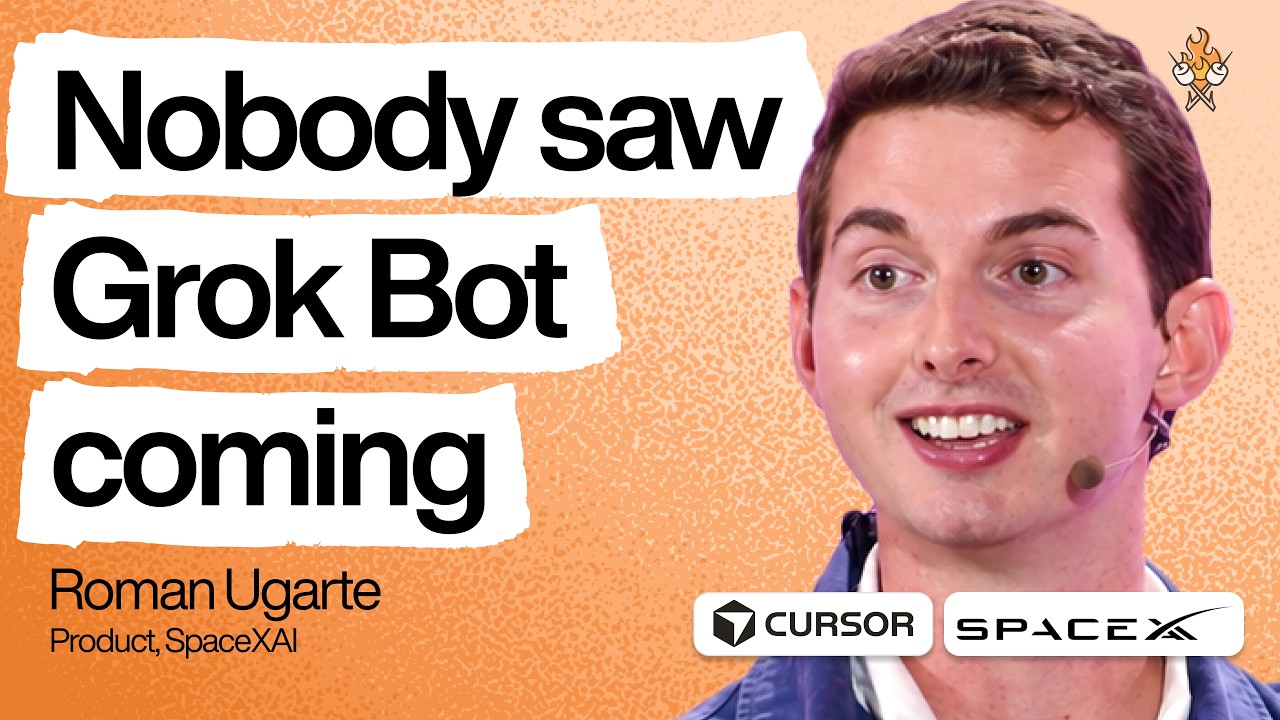
How we built Grok Bot in a month | Roman Ugarte (SpaceXAI)
Sep 8, 2026 · 1:22:43
Roman Ugarte, who leads product for Grok Bot at SpaceXAI, tells Lenny Rachitsky how a small, isolated team built Grok Bot from scratch in one month and launched it publicly just three weeks later. He explains why they built it separately instead of inside Cursor and why the team manually onboarded 200–300 users, including a coffee shop owner, to check blind spots. Two early decisions made it work, he argues: giving every bot its own cloud computer instead of sharing yours, and a 'colleague-pilled' philosophy that hides internal mechanics so delegating feels like trusting a real teammate. He also covers unshipping features pre-launch, natural-language automations, and argues Cursor outlasted OpenAI and Anthropic by reinventing itself every six months—moats are discovered, not planned.
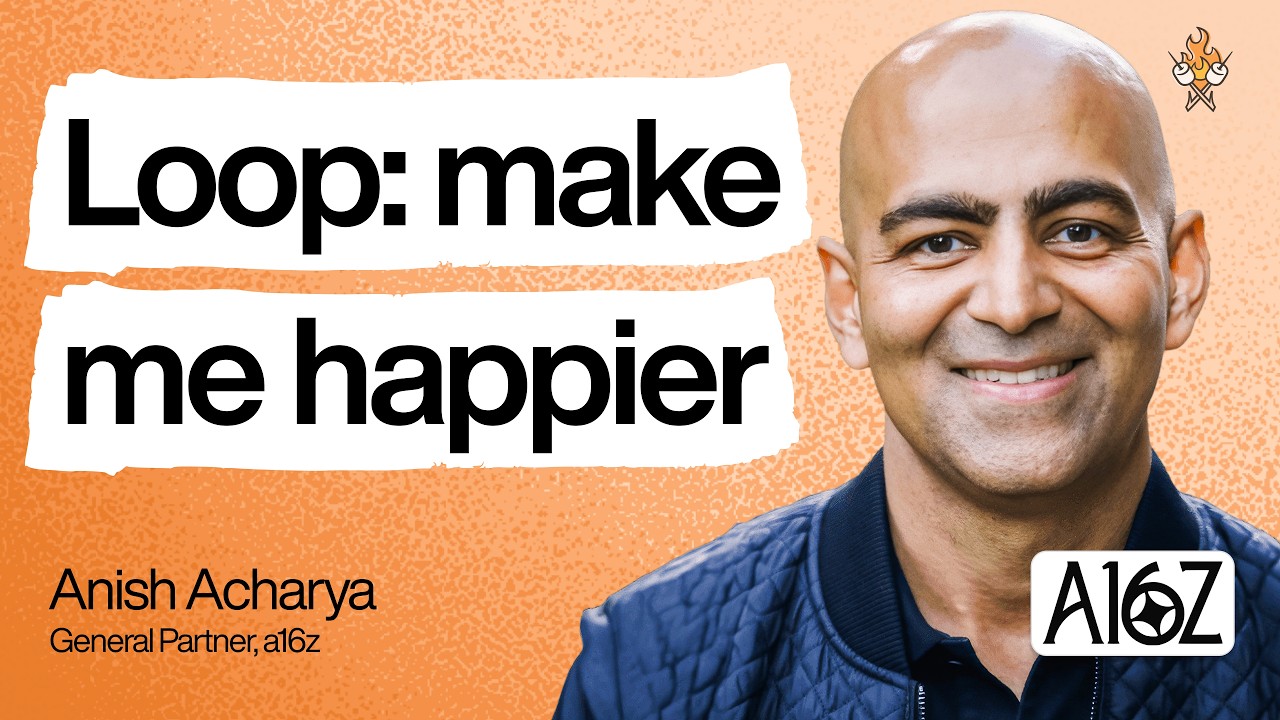
Why companies are becoming a series of loops | Anish Acharya (a16z)
Sep 6, 2026 · 1:19:25
Lenny Rachitsky hosts Anish Acharya, General Partner at Andreessen Horowitz (a16z), who argues the AI 'permanent underclass' fear is a dark fantasy and that company building is becoming a series of agent loops. He describes loops cascading from one per person to entire business functions, with humans still needed for the out-of-distribution thinking that pushes past local maxima. The biggest consumer opportunity, he says, is '/loop, make me happier'—applying AI to connection and joy, not productivity. Moats are discovered, not designed, he argues, citing Cursor and Granola, and organic word of mouth is now the strongest distribution moat. As a 'model sommelier,' he urges shipping something weekly with each new model.

AI’s third era: the rise of persistent AI coworkers | Tara Seshan (OpenAI’s product lead)
Aug 30, 2026 · 1:21:45
Tara Seshan, OpenAI's product lead for Codex and ChatGPT Work, tells Lenny Rachitsky that AI is entering a third era of persistent AI coworkers, where human judgment and ambition—not execution—become the differentiator. She explains why OpenAI builds for model capabilities two to three months out, citing memes like 'Is this maximally accelerated?' and 'Are you mainlining it yet?' as the product-development test. She says the PM job now centers on sharp hypothesis testing and elevating others' ambitions, and describes ChatGPT's Chat, Work, and Codex modes converging on a single box that picks the right harness. She also distinguishes writing as thinking (never automate) from writing as reporting (automate), and shares Sutter Hill's lesson that product marketing fit can precede building.
Powered by PodHood