Claude Code
ProductA product discussed on Lenny's Podcast.
4 episodes

Molly Graham: The grief, burnout, and opportunity hiding inside the AI transition
Sep 27, 2026 · 1:34:15
Molly Graham tells Lenny Rachitsky that her famous 'give away your Legos' advice no longer holds in an AI world: delegating to robots isn't delegating to a human, because you keep the oversight and mental tax. The advice came from Google and Facebook scale — her department grew from 25 to 125 people in 9 months, Facebook from 500 employees to 5,500 and a billion users — and leaning into change still wins. Grief, loneliness, and burnout in tech are real — burnout jumped from 44% to 55% — but AI displacement fear is overblown: AI-branded layoffs are 'bullshit,' and Manoush Zomorodi's reframe — assume your job always exists, just different every six years. Some Legos — judgment, trust, strategy — should never be given away, and AI is a lazy intern needing coaching, not a superintelligence.

How to run your product team like a research lab | Dan Shipper (Every)
Sep 24, 2026 · 18:32
Dan Shipper, co-founder and CEO of Every, argues product orgs should add a small labs team exploring frontier AI like Astra 6 and Fable 5.1 while the product team executes, because exploring and executing pull in opposite directions. Labs teams of one or two people—messy "pirates" with "architects"—should dogfood, run parallel experiments, and expect to discard 90%, recouping ROI through content and early adopter programs. Anthropic Labs produced Claude Code and skills this way, and OpenAI's Codex, launched February 2026, merged into ChatGPT's 800 million daily users. Every's "Kate Bench" shows the pipeline: an AI copy editor trained on editor-in-chief Kate's edits cut her work 12% in a month. He advises weekly pipeline reviews and criteria—recurring usage, 10x better, affordable.
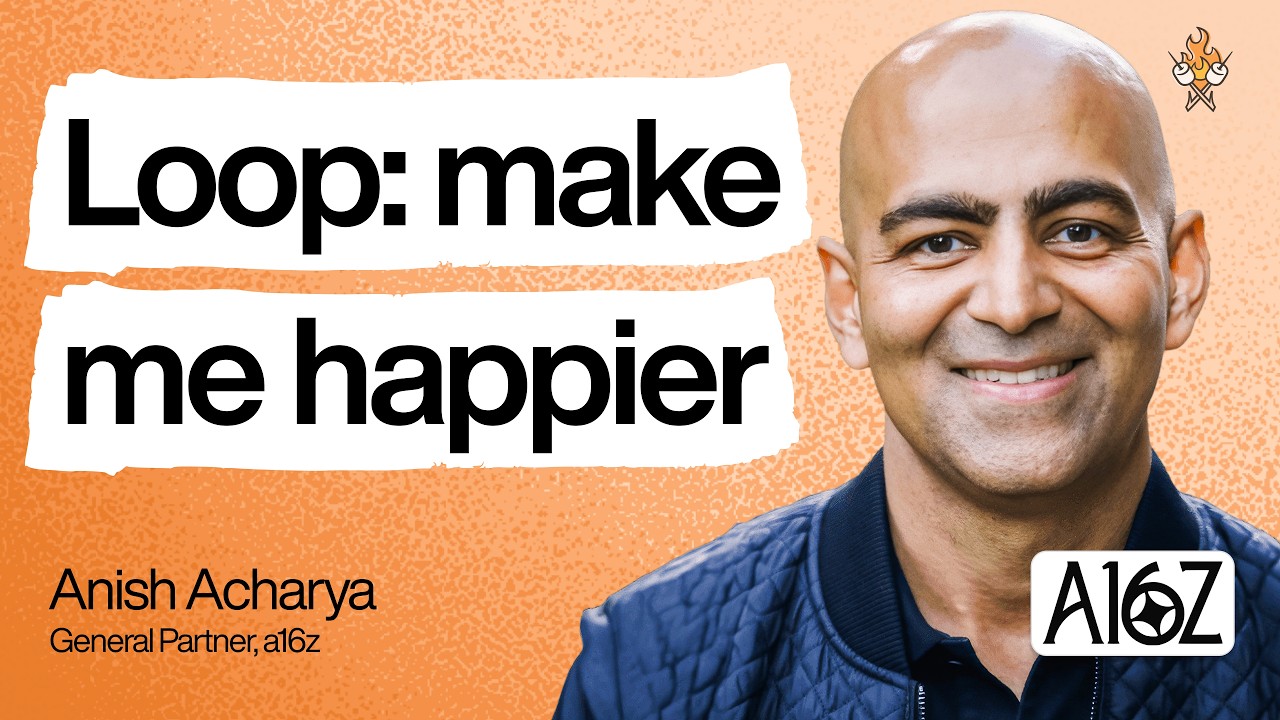
Why companies are becoming a series of loops | Anish Acharya (a16z)
Sep 6, 2026 · 1:19:25
Lenny Rachitsky hosts Anish Acharya, General Partner at Andreessen Horowitz (a16z), who argues the AI 'permanent underclass' fear is a dark fantasy and that company building is becoming a series of agent loops. He describes loops cascading from one per person to entire business functions, with humans still needed for the out-of-distribution thinking that pushes past local maxima. The biggest consumer opportunity, he says, is '/loop, make me happier'—applying AI to connection and joy, not productivity. Moats are discovered, not designed, he argues, citing Cursor and Granola, and organic word of mouth is now the strongest distribution moat. As a 'model sommelier,' he urges shipping something weekly with each new model.

AI’s third era: the rise of persistent AI coworkers | Tara Seshan (OpenAI’s product lead)
Aug 30, 2026 · 1:21:45
Tara Seshan, OpenAI's product lead for Codex and ChatGPT Work, tells Lenny Rachitsky that AI is entering a third era of persistent AI coworkers, where human judgment and ambition—not execution—become the differentiator. She explains why OpenAI builds for model capabilities two to three months out, citing memes like 'Is this maximally accelerated?' and 'Are you mainlining it yet?' as the product-development test. She says the PM job now centers on sharp hypothesis testing and elevating others' ambitions, and describes ChatGPT's Chat, Work, and Codex modes converging on a single box that picks the right harness. She also distinguishes writing as thinking (never automate) from writing as reporting (automate), and shares Sutter Hill's lesson that product marketing fit can precede building.
Powered by PodHood